Labels: How I Interacted with Them, Where They Come From, What They Mean to Me

The following is adapted from a presentation I gave in my Chicanx/Latinx Language & Identity class.
Enjoy. Or don’t. It’s whatever.
Americano:

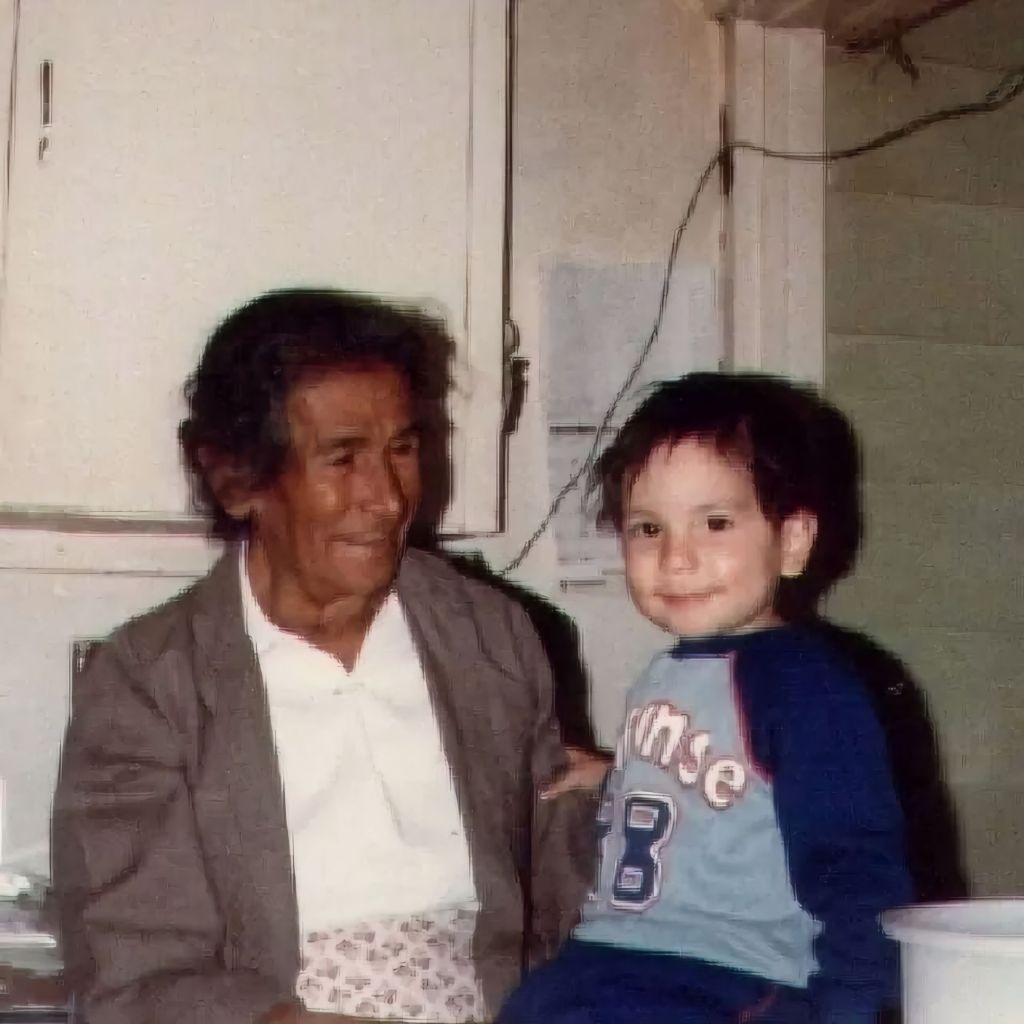
If I had asked my grandmother what I was, she’d say “americano.” This was her mindset. She was Mexican and her children and children’s children were American.
And in all sense, I was Americanized. I didn’t speak Spanish. To this day, my Spanish isn’t the best.
But I digress. Anyway…
Hispanic:

Hispanic was a bubble to fill on a job application or the US census. It was how the US government perceived me.
But, of course, it was more than that:
The term gained popularity in the 1970s to unify the community under one ethnic classification. The Mexican American Legal Defense and Education Fund in collaboration with several Hispanic organizations lobbied the federal government for the inclusion of the ethnic category.
Hispanic unified people with roots in Mexico, Cuba, Puerto Rico and several Spanish-speaking countries. The 1980 census was the first to collect information on Hispanics (Simon). But its time in the sun was short-lived. Soon criticism arose with the category because of its proximity to Spain, which gave rise to…
Latino:
Latino was more than placeholder for me. At the time, it felt like a comfortable sweatshirt on a lazy day in December.

Latino de-emphasized the connection with Spain, which several countries still recognized the wounds of colonization. More importantly, it brought in non-Spanish speaking Latin American countries such as Brazil into the fold, something Hispanic didn’t do.
According to Ramón A. Gutiérrez, the abbreviated word “latino” (Latino Americano) were used among Spanish speakers in California during the 19th. However, by 1920, the term fell out of the popular lexicon. There was a small resurgence during the civil rights movements of the 1970s and a greater one in the 1990s as criticism against the term Hispanic grew. By the 2000 US census, Latino was added alongside Spanish and Hispanic (Smith).
Latinx y Latine:
As I got older, Latino was no longer that comfortable sweater. I felt I had grown out of it the more I became conscious of my own queerness and how that began playing a role in my identity.

I was introduced to the term Latinx while working at a public library. But the term felt much heavier than a catch-all, umbrella category for the entire community. It felt co-opted by academia and the media, watering down what it stood for.
I could not articulate why it bothered me to be called such, which led to a lot of introspection on my end about my queerness. Was I not queer enough? There was also a cringe factor when non-queer folk used the term (and you wouldn’t guess who kept pushing it on me!).
It wasn’t until I read “The X In Latinx Is A Wound, Not A Trend” by Alan Pelaez Lopez that I understood why Latinx wasn’t for everyone, and why it wasn’t for me.
In their essay, Lopez explains the four wounds the X represents:
- The Wound of Settlement
- The Wound of Colorism
- The Wound of Femicides
- The Wound of Inarticulation
They conclude their essay with the following:
People often tell me that “Latinx” doesn’t make sense grammatically or linguistically. My reply is that it does because the nonsensical of the “X” is the same nonsensical of living at the intersections of settlement, anti-Blackness and femicides.
However, I want to remind us that the “X” in Latinx is one of the inventions of queer, trans, feminist, Black and Indigenous Latinx subcultures have developed to begin addressing the four wounds of Latinidad and force us to see ourselves in all of our complexity, history, and to hopefully, imagine a future.
For these reasons, I argue that the “X” in Latinx is a wound as opposed to a trend that speaks to a collective history. The “X” is attempting to speak to the violence of colonization, slavery, against women and femmes, and the fact that many of us experience such an intense displacement and silence that we have no language in which to articulate who we are. Therefore, if you are using “Latinx,” I encourage you to ask yourself at the end of everyday: “what have I done to show up for Black, Indigenous, women and femmes of the Latin American diaspora today?” And second, “why?” Here, you’ll be crafting your vision of a Latinx liberation that doesn’t leave the most marginalized behind. However, this is no easy task and it will require both a desire and an everyday commitment. (Lopez)
So why did I choose Latine?
No one word will ever encompass everybody, but for me, Latine doesn’t feel co-opted in the same manner that academia and media did with Latinx. The gender neutral “e” exists in Spanish already, too, with words such as “estudiante,” (“Hispanic, Latin@, Latinx or Latine?”) so there’s no arguing with conservative Latinos (read: vendidos y pendejos).
However, not everyone wants to be clumped under a single umbrella term. And this is why I still go the long way when speaking about my community—Latina/e/o/x.
For now, Latine is what I am most comfortable with. And it may not be the label I continue with after more introspection.
And the Others?
You may have noticed I left out some labels. I did so purposefully because these words did not resonate with me at any time. Some labels can be picked up and tired on, while others, I feel, require a little legwork. While there are several causes I believe in, my form of activism has always been donations. I blame the mild agoraphobia for this, but I am who I am and I can’t change that (and trust me, I have tried). So something like Chicano/x (Xicano/Xicanx) never felt right for me. And I do need to stress this—you don’t need to be politically active to call yourself a Chicana/o/x (Xicana/o/x).
References:
“Hispanic, Latin@, Latinx or Latine?“ Cambio Center, cambio.missouri.edu, 2024,
Lopez, Alan Pelaez. “The X In Latinx Is A Wound, Not A Trend.” Color Bloq, Sept. 2018.
Simon, Yara. “Latino, Hispanic, Latinx, Chicano: The History behind the Terms.” History, 14 Sept. 2020, https://www.history.com/news/hispanic-latino-latinx-chicano-background.
Smith, Kaitlin. “Latinx vs. Hispanic: A History of Terms.” facinghistory.org. 15 Oct. 2021, https://www.facinghistory.org/ideas-week/latinx-vs-hispanic-history-terms
 Chapin City Blues
Leave a comment